


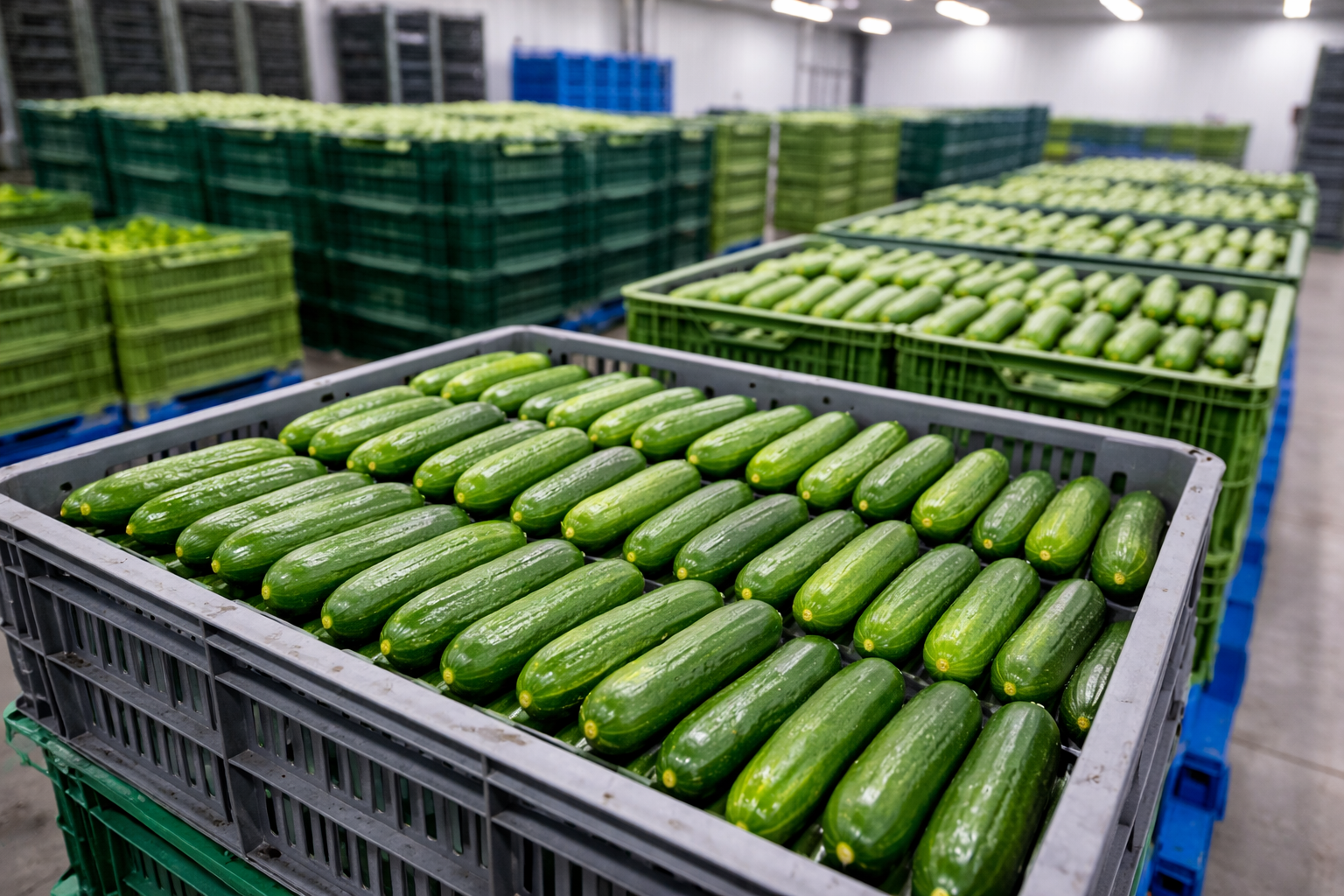
Persian cucumber shelf life depends heavily on how the product is handled from storage to display. These small, seedless cucumbers are valued for their crisp texture and mild flavor, making them popular with restaurants, grocery markets, and food-service businesses across California. However, improper handling can quickly lead to dehydration, spoilage, and financial loss. By following proven handling and storage practices, businesses can extend the shelf life of Persian cucumbers while maintaining consistent quality.
The Importance of Proper Storage Conditions
Ideal Temperature and Humidity
Persian cucumbers are sensitive to environmental factors. To maximize their freshness and shelf life, they should be stored at a temperature between 50°F to 55°F. Storing them at lower temperatures can cause chilling injuries, resulting in pitting and premature deterioration. On the other hand, higher temperatures lead to rapid wilting and spoilage.
Humidity levels also play a crucial role. Maintain a relative humidity of 90% to 95% to prevent dehydration and shrinkage. Without the right moisture balance, cucumbers can lose their crisp texture, making them less appealing to customers.
Use Proper Packaging
Proper packaging minimizes moisture loss and reduces the risk of physical damage during storage. Consider using perforated bags or plastic wraps that allow for adequate air circulation while retaining enough humidity to keep your cucumbers firm and fresh. Avoid airtight packaging, as it can trap heat and accelerate spoilage.
Handling During Transport and Delivery
Transporting Persian cucumbers requires care and attention to detail. During delivery, cucumbers are especially vulnerable to heat exposure and mechanical damage, both of which can reduce their shelf life significantly.
Maintain a Consistent Cold Chain
A well-maintained cold chain is vital in preserving the quality of Persian cucumbers. Ensure that transport vehicles are equipped with refrigeration systems set to the ideal temperature range of 50°F to 55°F. Regularly monitor temperature levels throughout the delivery process to avoid fluctuations that could harm the cucumbers.
Prevent Physical Damage
Mechanical damage during transport is one of the most common reasons for premature spoilage. Package cucumbers carefully and use padded crates or boxes to prevent bruising. Train staff to handle produce gently at every step of the supply chain, from loading to unloading.
Display Techniques That Preserve Freshness
For food-service businesses and markets, how Persian cucumbers are displayed has a significant impact on their shelf life. Proper display methods ensure that cucumbers stay appealing to customers while reducing waste.
Rotate Stock Regularly
Always use the FIFO method (First In, First Out) when managing your stock. Place older cucumbers at the front of the display and newer ones at the back. This ensures that all items are sold before they begin to spoil, reducing shrinkage from excess inventory.
Avoid Direct Heat and Sunlight
When displaying cucumbers, keep them away from direct heat sources or sunlight, which can cause dehydration and wilting. Use refrigerated display cases whenever possible to maintain freshness throughout the day.
Monitor and Refresh Displays
Check your displays frequently for damaged or wilting cucumbers. Remove compromised produce immediately to prevent the release of ethylene gas, which can accelerate spoilage in neighboring cucumbers.
Common Mistakes That Cause Premature Spoilage
Understanding what not to do is just as important as following best practices. Here are common mistakes to avoid:
- Storing Persian Cucumbers Below 50°F: Chilling injuries caused by overly cold temperatures can permanently damage the cucumbers’ texture and appearance.
- Overpacking Crates or Displays: Overcrowding can bruise cucumbers and restrict airflow, leading to rapid decay.
- Ignoring Proper Humidity Levels: Both excess dryness and too much moisture can negatively impact cucumber quality. Always use controlled environments to maintain consistent humidity.
- Delaying Transport: Cucumbers are perishable and need prompt transportation from farm to facility to minimize quality loss.
How Proper Handling Protects Your Profits
By prolonging the shelf life of Persian cucumbers, businesses can significantly reduce shrinkage and improve profit margins. Spoiled produce leads to financial losses through waste, while fresh, high-quality cucumbers satisfy customers and boost sales. Proper handling not only protects your investment but also enhances trust in your establishment’s commitment to quality.
Taking these steps ensures that every Persian cucumber you handle is as fresh and appealing as the day it was harvested. With attention to detail and adherence to produce handling best practices, your business can maintain its reputation while operating more efficiently.
Looking To Buy Produce in Bulk? CRJ Produce Inc Can Help
No matter the season, CRJ Produce offers the fresh produce you need year-round. Contact us at info@crjproduceinc.com or fill out the form on our website to get in touch with our team or through our social media accounts (Facebook, Twitter, and LinkedIn)!. with our team. We look forward to hearing from yo